



 Tiếng Việt
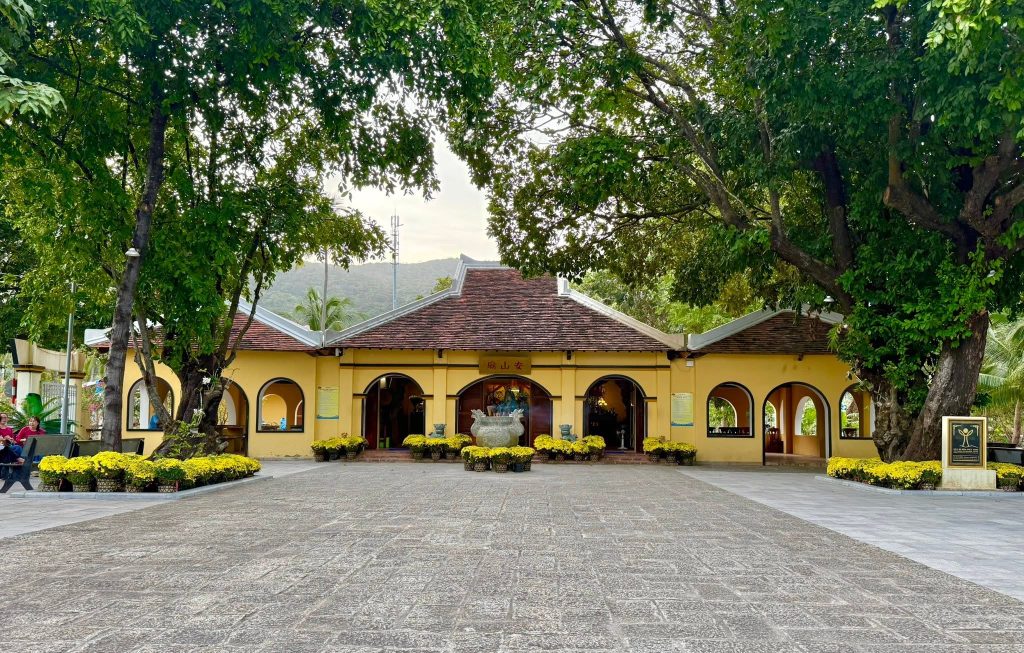
An Son Temple Con Dao, also known as Phi Yen Temple or An Son Mieu, is one of the island’s most significant cultural and spiritual attractions. Located approximately 2 kilometers southwest of central Con Dao, the temple is associated with the legend of Lady Phi Yen, traditionally believed to have been a consort of Nguyen Phuc Anh, who later became Emperor Gia Long of the Nguyen Dynasty.
Surrounded by peaceful natural scenery, the temple is not only a place of worship but also an important part of Con Dao’s local folklore and spiritual traditions.
The story of Lady Phi Yen and Prince Cai has been passed down through generations, reflecting themes of loyalty, sacrifice, patriotism and personal tragedy. However, historians have raised questions about the historical accuracy of the legend, particularly its connections to Nguyen Phuc Anh.
Today, An Son Temple remains a popular destination for visitors interested in exploring Con Dao’s cultural heritage, traditional beliefs and historical narratives.
An Son Temple Con Dao: Location, Architecture and Cultural Significance
An Son Temple is located on Hoang Phi Yen Street, Area 3, Con Dao Special Zone, Ho Chi Minh City, Vietnam. Before the administrative reorganization in 2025, the island belonged to Ba Ria – Vung Tau Province.
Situated near the foot of Thanh Gia Mountain in the former An Hai village, the temple offers a tranquil environment surrounded by trees and lush vegetation.
Visitors can easily reach the temple from central Con Dao by motorbike, taxi or local transportation.
According to local heritage documentation, the temple complex occupies an area of approximately 4,200 square meters and features traditional Vietnamese architectural elements, including an entrance gate, courtyard, main sanctuary and supporting structures.
The present temple was rebuilt in 1958 on a site associated with the island’s earlier folk worship traditions.
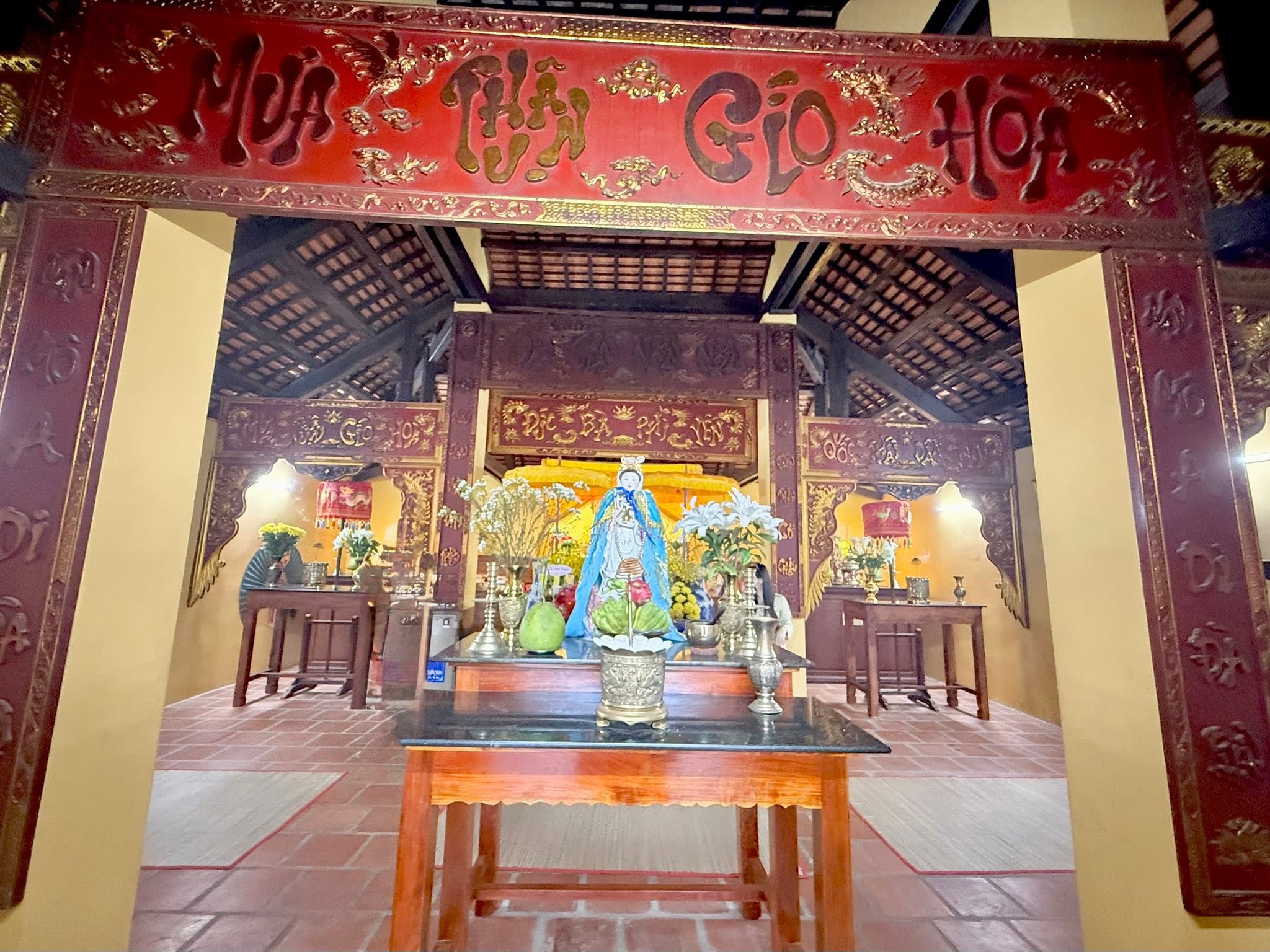
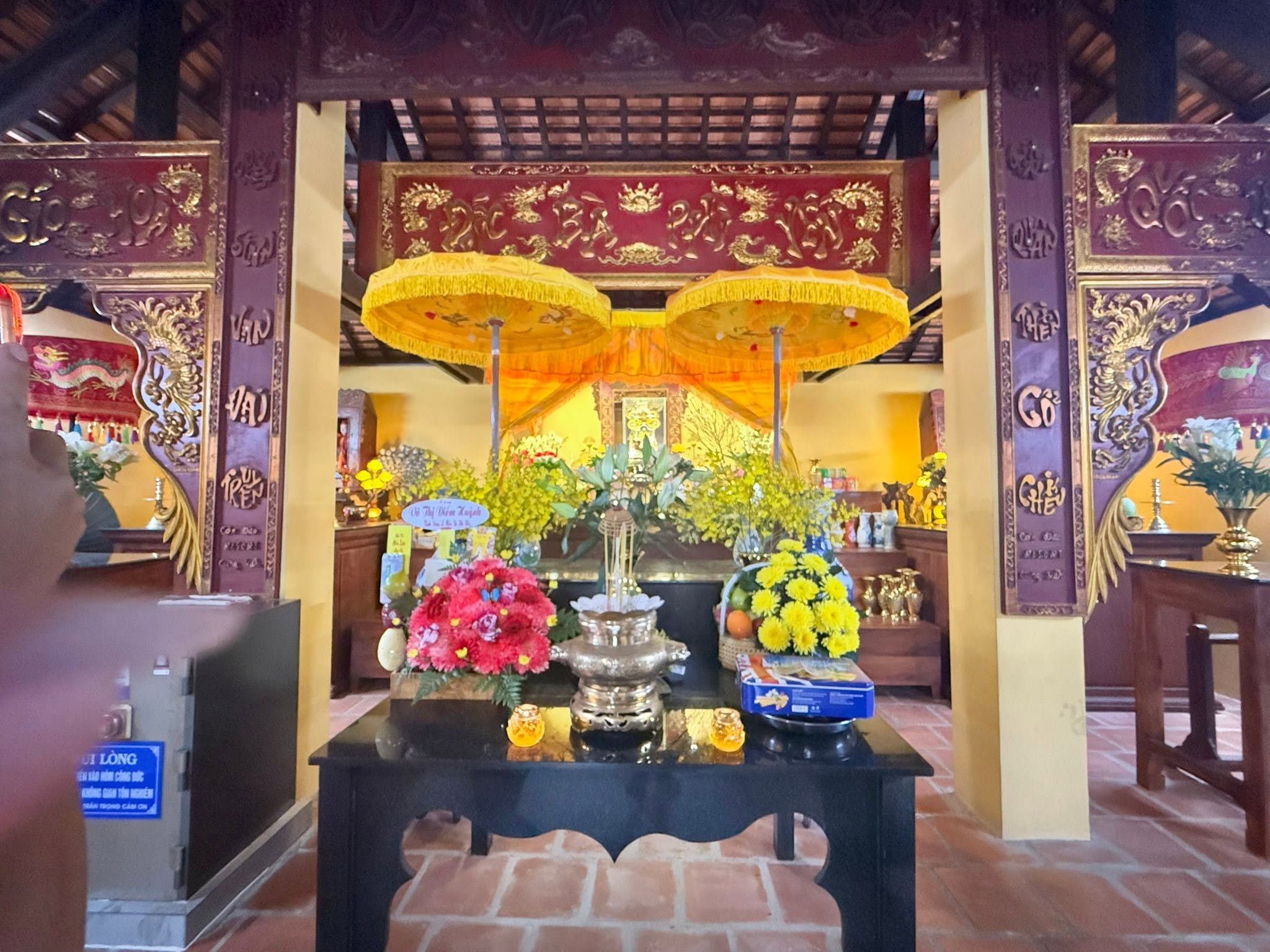
Inside the sanctuary, visitors can see altars and religious figures associated with local beliefs, including Lady Phi Yen and Prince Cai.
The architecture reflects the spiritual traditions of southern Vietnam, while the surrounding landscape creates a peaceful atmosphere for worship and contemplation.
On April 18, 2007, the People’s Committee of Ba Ria – Vung Tau Province officially recognized An Son Temple as a provincial-level historical and cultural relic under Decision No. 1442/QD-UBND.
Beyond its architectural value, An Son Temple represents the spiritual life of Con Dao’s coastal communities, where generations of residents have gathered to pray for peace, good health and prosperity.
The Legend of Lady Phi Yen and Prince Cai
According to local folklore, Lady Phi Yen, whose birth name is said to have been Le Thi Ram, was a secondary consort of Nguyen Phuc Anh.
The legend begins in 1783, when Nguyen Phuc Anh was reportedly fleeing the Tay Son forces and sought refuge on Con Dao Island with his family and followers.
During this period, he was said to be considering assistance from France to strengthen his military campaign against the Tay Son.
Lady Phi Yen allegedly advised him against relying on foreign powers in a domestic conflict, expressing concern that such intervention could have serious consequences for the country.
Angered by her advice, Nguyen Phuc Anh reportedly ordered her imprisonment in a cave on a smaller island, traditionally associated with what is now known as Hon Ba Island.
According to the legend, Lady Phi Yen was eventually rescued by two loyal animals, a white gibbon and a black tiger, which helped her escape and return to Co Ong village.
The story also recounts the tragic fate of Prince Cai, also known as Prince Hoi An, who was believed to be her young son.
When Nguyen Phuc Anh departed the island, the child reportedly cried for his mother. In a moment of anger, the ruler was said to have thrown the boy into the sea.
Local villagers later discovered the child’s body washed ashore at Co Ong Beach and buried him nearby.
Lady Phi Yen subsequently returned to the village to care for her son’s grave.
In 1785, during a religious ceremony organized by residents of An Hai village, the legend recounts that a man named Bien Thi attempted to assault her. Deeply distressed by the incident, Lady Phi Yen took her own life.
The villagers, moved by her suffering and the virtues attributed to her, established a shrine in her memory.
The story is traditionally associated with a well-known southern Vietnamese folk verse:
Gió đưa cây cải về trời,
Rau răm ở lại chịu lời đắng cay.
The verse symbolically refers to Prince Cai and Lady Phi Yen, whose name Ram is associated with Vietnamese coriander, known locally as rau ram.
Over time, the legend became an integral part of the island’s oral traditions and helped establish An Son Temple as a place of spiritual significance.
It is important to note that this account is a folk legend rather than a historically verified narrative. Several elements of the story have been challenged by researchers examining the genealogy of the Nguyen royal family and historical records from the eighteenth century.
The Historical Debate Surrounding Lady Phi Yen and Emperor Gia Long
Although the legend of Lady Phi Yen is widely shared through travel publications, local storytelling and cultural activities, its historical accuracy remains disputed.
Researchers have questioned whether Lady Phi Yen was genuinely a consort of Nguyen Phuc Anh and whether the future Emperor Gia Long ever visited Con Dao during his campaigns against the Tay Son.
Was Lady Phi Yen Really a Consort of Nguyen Phuc Anh?
According to Nguyen Phuc Toc The Pha, a genealogy of the Nguyen royal family published in 1995, Emperor Gia Long had 21 wives, 13 princes and 18 princesses.
However, the genealogy does not record a consort named Le Thi Ram or Phi Yen. Likewise, there is no documented prince named Cai or Hoi An matching the individual described in the legend.
Historical accounts identify Tong Thi Lan and Tran Thi Dang among Nguyen Phuc Anh’s consorts during the period when he was struggling to establish his political and military position.
Tong Thi Lan was the mother of Crown Prince Nguyen Phuc Canh, while Tran Thi Dang gave birth to Nguyen Phuc Dam, who later became Emperor Minh Mang.
The absence of Lady Phi Yen and Prince Cai from established royal genealogical records is one of the main reasons historians question the legend’s historical foundation.
Nevertheless, the lack of historical confirmation does not diminish the importance of the story as part of Con Dao’s cultural traditions.
Did Nguyen Phuc Anh Ever Visit Con Dao Island?
Another debated issue concerns the historical identification of an island called Con Lon.
Certain Nguyen Dynasty chronicles, including Dai Nam Thuc Luc, contain references to Nguyen Phuc Anh seeking refuge on an island identified as Con Lon in 1783 while escaping Tay Son forces.
However, some historians have argued that the location mentioned in these records may not correspond to present-day Con Dao Island.
In the early twentieth century, French historian Charles Maybon and subsequent researchers examined Nguyen Phuc Anh’s movements around the Gulf of Thailand.
One interpretation suggests that the island mentioned in the chronicles may have been confused with another location in the waters near Cambodia, rather than the Con Dao archipelago southeast of mainland Vietnam.
Supporters of this interpretation question whether Nguyen Phuc Anh possessed sufficient ships and military resources to reach Con Dao during the period of intense pursuit by Tay Son forces.
These arguments have contributed to continuing historical discussions about the accuracy of the island’s traditional narratives.
At a scholarly discussion held in Hue on April 26, 2022, representatives of the Nguyen royal family and historical researchers challenged the portrayal of Lady Phi Yen as Emperor Gia Long’s consort and questioned the story of Prince Cai.
The discussion emphasized the importance of distinguishing historical evidence from oral traditions and folk beliefs.
Who Was Originally Worshipped at An Son Temple?
Some cultural researchers have suggested that An Son Temple may have originated as a shrine dedicated to a female protective deity associated with coastal communities.
In southern Vietnamese folk religion, goddesses such as Ba Chua Ngoc, Ba Chua Tien and Thuy Long Thanh Phi have long been worshipped by fishing communities.
These deities are traditionally associated with maritime protection, favorable weather, safe voyages and community well-being.
Because the original shrine underwent substantial changes and was rebuilt in 1958, its earliest religious purpose cannot be established with certainty.
The historical identity of the temple’s original deity therefore remains an area for further research.
Despite the controversy surrounding the Lady Phi Yen legend, An Son Temple continues to hold significant cultural and spiritual value for Con Dao residents.
Its importance lies not only in the historical claims associated with the site but also in the preservation of local traditions, community identity and intangible cultural heritage.
An Son Temple Festival and Travel Guide to Con Dao
Every year, An Son Temple hosts a traditional festival commemorating Lady Phi Yen on the 18th day of the tenth lunar month.
The event, known locally as Le Gio Ba Phi Yen, is among Con Dao’s best-known cultural celebrations.
Festival activities typically take place over several days, with the main ceremonies held around the 16th to 18th days of the tenth lunar month.
Traditional activities may include incense offerings, memorial ceremonies, processions and cultural performances reflecting the island’s spiritual customs.
In 2022, the Lady Phi Yen Commemoration Festival was included in Vietnam’s national list of intangible cultural heritage. The recognition also prompted scholarly discussions regarding the distinction between the festival’s cultural significance and the disputed historical details of the legend.
Today, the festival continues to provide an opportunity for local communities and visitors to experience Con Dao’s traditional beliefs.
Visitor Information for An Son Temple
| Information | Details |
|---|---|
| Attraction | An Son Temple |
| Alternative names | Phi Yen Temple, An Son Mieu |
| Address | Hoang Phi Yen Street, Area 3, Con Dao Special Zone, Ho Chi Minh City |
| Distance from central Con Dao | Approximately 2 km |
| Suggested visiting hours | 7:00 AM – 6:00 PM, subject to local arrangements |
| Main annual festival | 18th day of the tenth lunar month |
| Heritage status | Provincial-level historical and cultural relic |
Visitors are encouraged to dress respectfully, maintain a peaceful atmosphere and follow local regulations when entering worship areas.
Photography should be conducted with consideration for worshippers and religious ceremonies.
Travelers visiting during the annual festival can also explore other nearby cultural and historical attractions, including Con Dao Museum, the Con Dao Prison historical complex, Hang Duong Cemetery and the island’s scenic beaches.
How to Get to An Son Temple by High-Speed Ferry
Travelers from mainland Vietnam can reach Con Dao by high-speed ferry from departure points such as Vung Tau and Tran De, depending on current service availability.
Ferries may arrive at Ben Dam Port or Con Dao Passenger Port, depending on the operator and the sailing schedule.
From the arrival port, visitors can take a taxi, electric vehicle or arranged transfer to their accommodation before exploring the island.
Since An Son Temple is located close to central Con Dao, it can easily be included in a half-day sightseeing itinerary covering the island’s most important historical and cultural landmarks.
Travelers can check available Con Dao ferry schedules through Taucaotoc.vn:
| Date | Vung Tau → Con Dao | Con Dao → Vung Tau |
|---|---|---|
| 30/10/2026Friday (Today) | Not operating | Not operating |
| 31/10/2026Saturday (Tomorrow) | Not operating | Not operating |
| 01/11/2026Sunday | Not operating | Not operating |
| 02/11/2026Monday | Not operating | Not operating |
| 03/11/2026Tuesday | Not operating | Not operating |
| 04/11/2026Wednesday | Not operating | Not operating |
| 05/11/2026Thursday | Not operating | Not operating |
| 06/11/2026Friday | Not operating | Not operating |
| Date | Ho Chi Minh City → Con Dao | Con Dao → Ho Chi Minh City |
|---|---|---|
| 30/10/2026Friday (Today) | Not operating | Not operating |
| 31/10/2026Saturday (Tomorrow) | Not operating | Not operating |
| 01/11/2026Sunday | Not operating | Not operating |
| 02/11/2026Monday | Not operating | Not operating |
| 03/11/2026Tuesday | Not operating | Not operating |
| 04/11/2026Wednesday | Not operating | Not operating |
| 05/11/2026Thursday | Not operating | Not operating |
| 06/11/2026Friday | Not operating | Not operating |
| Date | Tran De → Con Dao | Con Dao → Tran De |
|---|---|---|
| 30/10/2026Friday (Today) | 08:00 - Superdong | 13:00 - Supedong |
| 31/10/2026Saturday (Tomorrow) | 09:30 | Not operating |
| 01/11/2026Sunday | Not operating | 14:30 |
| 02/11/2026Monday | 08:00 - Superdong | 13:00 - Supedong |
| 03/11/2026Tuesday | 08:00 - Superdong | 13:00 - Supedong |
| 04/11/2026Wednesday | 08:00 - Superdong | 13:00 - Supedong |
| 05/11/2026Thursday | 08:00 - Superdong | 13:00 - Supedong |
| 06/11/2026Friday | 08:00 - Superdong | 13:00 - Supedong |
Ferry routes, departure times and port assignments may change due to weather conditions and operational arrangements. Passengers should confirm their sailing details before departure.
An Son Temple is more than a place of worship. It represents the interaction between traditional folklore, religious customs and historical interpretation in one of Vietnam’s most distinctive island communities.
For international visitors, understanding the legend of Lady Phi Yen alongside the historical debate surrounding it provides a richer perspective on Con Dao’s cultural heritage.
Whether visiting for spiritual reflection, cultural exploration or historical interest, An Son Temple offers a meaningful addition to any Con Dao travel itinerary.
Con Dao Ferry Tickets and Travel Information
For updated high-speed ferry schedules, ticket information and travel guidance, visit https://taucaotoc.vn/.